Dandadan Fansub Ep 3 Translation Notes
S01E03-It’s a Clash Of The Hags.mkv
One issue that’s been coming up repeatedly is the problem of translating Buddhist and Shinto spiritual terms in a way that makes sense to a Western audience who is generally unfamiliar with the concepts, but also in a way that doesn’t trivialise or fantasise these spiritual practices.

そいつは結界だからよ。この円の内側に護符釘を打つと円の内側が結界になるんだぜ。
I’m sure you know about holy thresholds. Hammer the gofu-nail inside the circle, and the inside is protected.
It’s also important to differentiate which words are commonly understood among Japanese people, and which words are invented for Dandadan. In the above line, 結界 (holy threshold) appears to be a common word, while 護符釘 (gofu-nail) seems to be more fantastical. When translating, I generally infer this from the usage of these words in other episodes, from the presence of a Wikipedia article, and from the types of search results on Google.
結界 has a Wikipedia article on Japanese Wikipedia, and switching languages to English gives this article for “Bai sema” which describes Thai “boundary stones” at Buddhist temples. A Japanese dictionary also gives several definitions which define it using even more obscure Buddhist terminology, but the general meaning is clearly “an object that prevents evil from entering a protected Buddhist space” or more generally “the protection of a Buddhist space from evil using boundaries”. Momo uses the word casually in episode 2, so I can infer that it’s not so obscure that the average viewer would be unable to deduce its meaning from context. This is why I translated it in a more accessible way — “holy threshold”.
On the other hand, 護符釘 has no Wikipedia article, though 護符 by itself (gofu; talisman) is a more common word, as is 釘 (nail). Searching 護符 on Wikipedia will redirect you to お守り (o-mamori; charm), the most common variety of which any weeb would recognise:
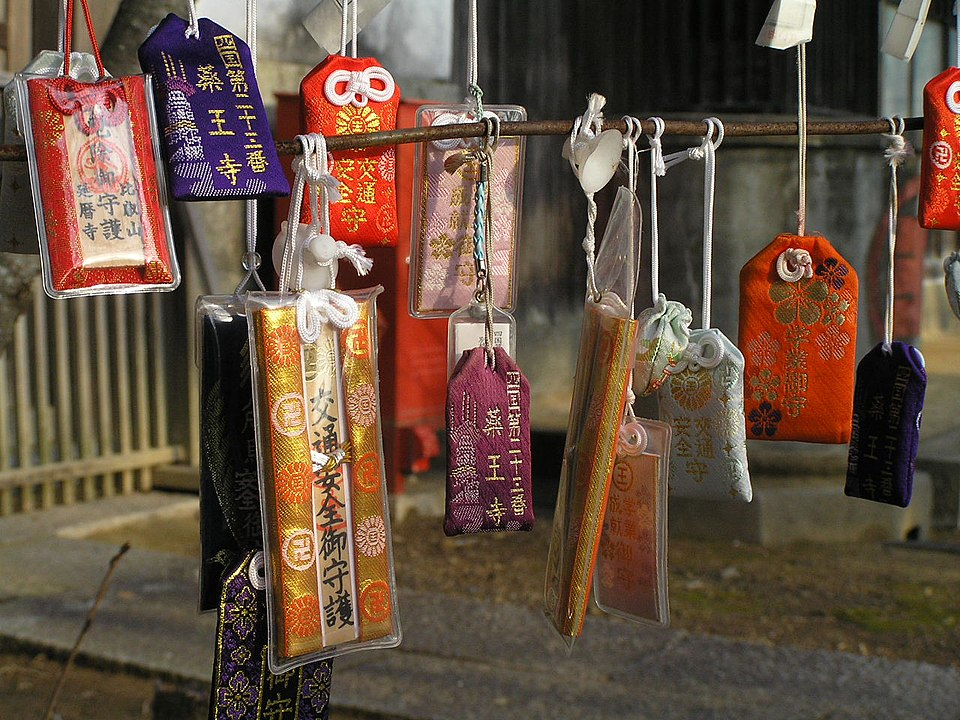
護符釘 also returns very sparse Google results, and most of the top results are for Dandadan itself. This indicates that the word is invented, or at the very least extremely obscure. In order to give my translation’s audience the same impression of unfamiliarity, but preserve the obvious Buddhist spiritual meaning of the word, I chose to leave “gofu” untranslated. I think the use of the word was originally intended to convey Seiko’s extensive knowledge of Japanese spiritualism, and I feel like “gofu-nail” preserves this vibe and avoids the clunkiness of a direct translation (protection-nail).
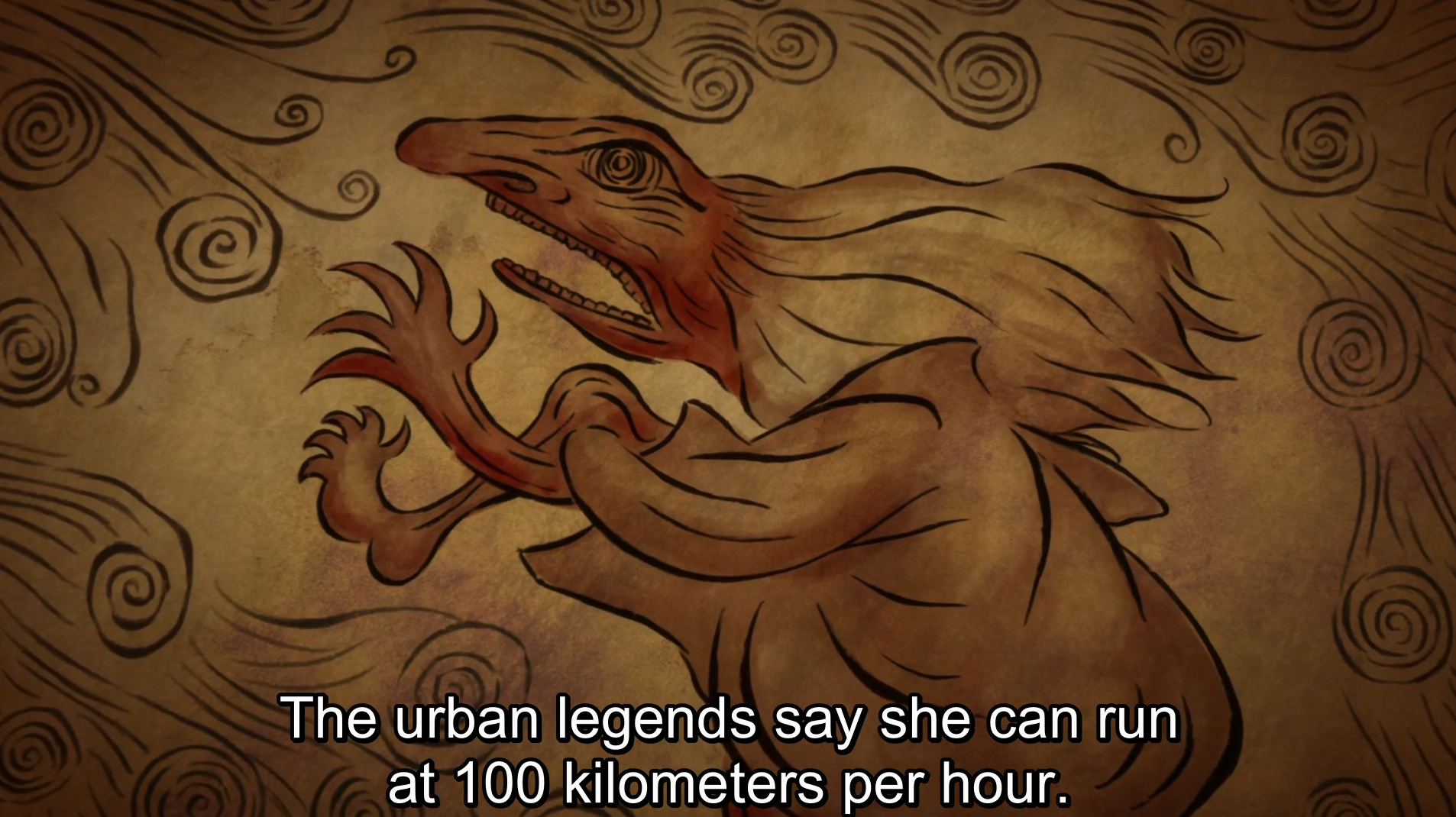
This next series of lines presented many challenges, and I want to show both a direct translation and my final translation to illustrate the difficulties in translating such a dense exposition dump.
- 昔は100キロババアとか呼ばれててよ。
- 全国暴れ回ってた「近代妖怪」だぜ。
- そんな神出鬼没やろうが
- 最近あのトンネルに長いこと居座ってるって聞いて
- 一度だけ様子を見に行ったことがある
Direct translation
- Long ago, she used to be called by other names, like “100-kilometre-per-hour hag”.
- She’s a “new age/urban legend yokai” who terrorised and roamed around the whole country.
- That [something that appears in unexpected places and at unexpected moments]
- I heard recently that she had settled in that tunnel
- and I decided to go check it out, just once.
Final translation
- Years ago, she used to roam all over the country, terrorising people.
- The urban legends say she can run at 100 kilometres per hour.
- But one day I heard a surprising rumour.
- The erratic speed demon had apparently settled down in a tunnel.
- I decided to go check it out, just once.
Line 1 conveys important information — that the Highway Hag runs at 100 kilometres per hour (this is a plot relevant detail that matters in the next episode). It does so through an alternative name, simultaneously implying that she’s well known and that she’s been around for a while. Unfortunately “100-kilometre-per-hour-hag” sounds so ridiculous in English that it’s completely unusable, so I had to use different techniques to get the same info across. The other info I needed to convey from lines 1 and 2 is that she was known all over Japan, and that she is an urban legend.
I rephrased this by transferring the “whole country” and “terrorising people” info from line 2 into my translated line 1, and then dedicating line 2 to the 100km/h info. I was happy with the phrasing “the urban legends say”, since it efficiently gets across the implication that she’s well known, as well as the fact that she’s an urban legend.
The original line 3 uses a metaphorical/idiomatic word, 神出鬼没 (literally: kami-appearing-demons-disappearing) which means “popping up unexpectedly, in unexpected places” or simply “elusive”. I loved the spiritual/supernatural theming of this word, so I tried to preserve a little of that with “speed demon”, which I think does a good enough job of also translating the fact that she’s difficult to catch. Though again, I had to rephrase this so that it didn’t actually appear in the line it was originally said in.
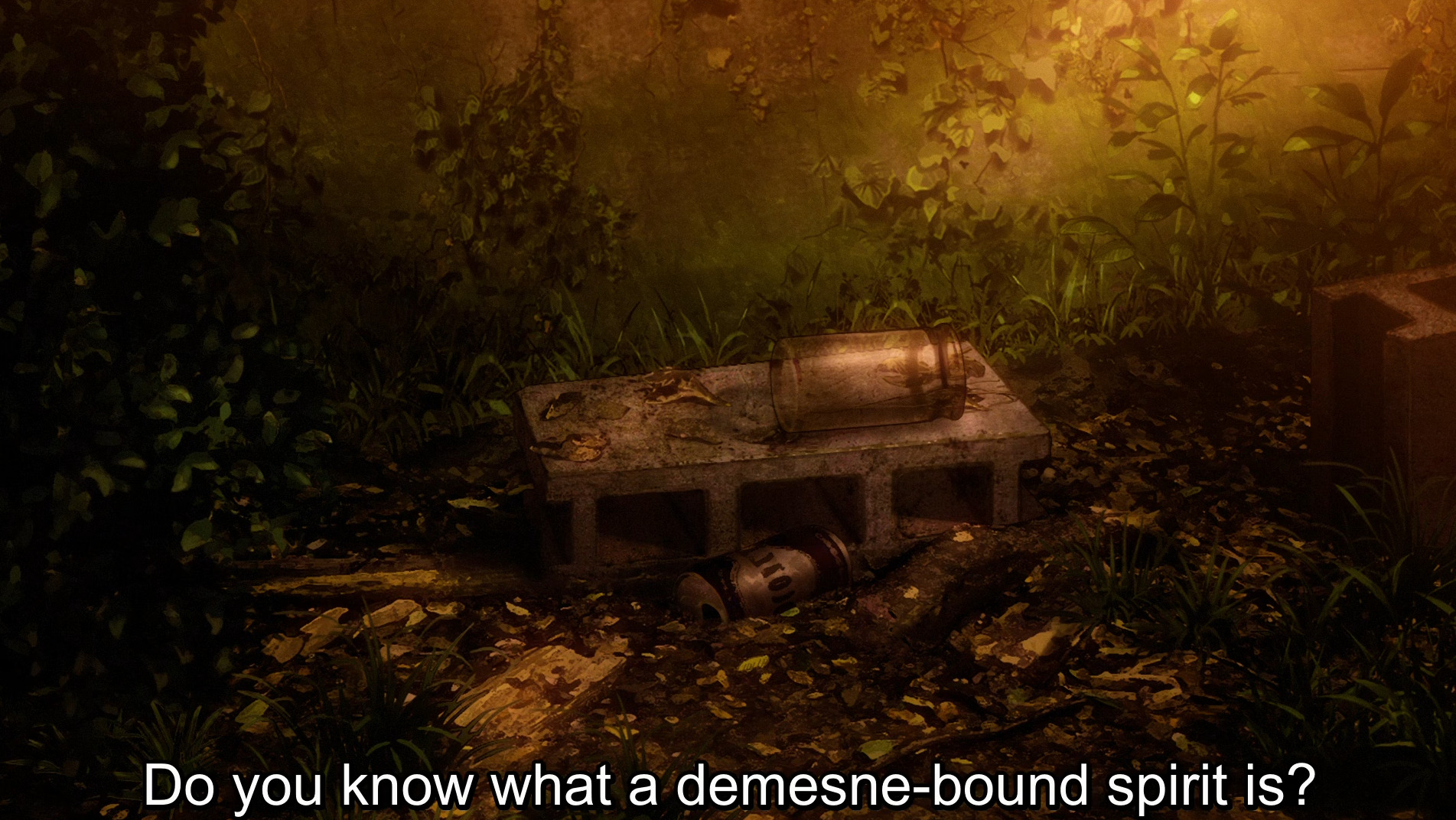
My final note is for the translation of 地縛霊. In the dub, it’s translated simply as “bound spirit” (sounds good), while in the sub it’s “location-bound spirit” (gets all the meaning across). On the Dandadan wiki, it’s “earthbound spirit” (sounds cool but that’s not what 地 means in this context — it’s “place” rather than “earth”). 地縛霊 is a semi-common word in Japanese, but has no established English equivalent. The main issue with this word is that it sounds fucking SICK in Japanese, but any English translation that gets all the meaning across is going to sound kind of clunky and certainly not as cool.
The characters in the story use the word テリトリー (teritorī; a loanword of “territory”) to describe the location the 地縛霊 is tied to. In Japanese, the use of English here has a cool factor and a foreignness factor that I wanted to convey as well.
I find that in supernatural or spiritual stories in English, the word “demesne” is often used to describe a spiritual territory, and it certainly has the cool factor I was looking for. Once I decided I was using it for テリトリー, it was a no brainer to use it for 地縛霊 as well. It gets all the info across, but it also sounds kind of spooky and sick.
That’s it for this week! A big thank you to Chy for editing my translation! You’ve been so helpful and I super appreciate it!