Utena Fansub Ep 35 Translation Notes
Revolutionary Girl Utena Episode 35 The Love That Blossomed In Wintertime.mkv
Sorry about the wait on this one… I’ve been hugely busy with life stuff. I have a fantastic new partner who’s been such a joy to be with that I haven’t made much time for the fansub! I’m already halfway done with the next episode so hopefully it shouldn’t be too much of a wait for that one!
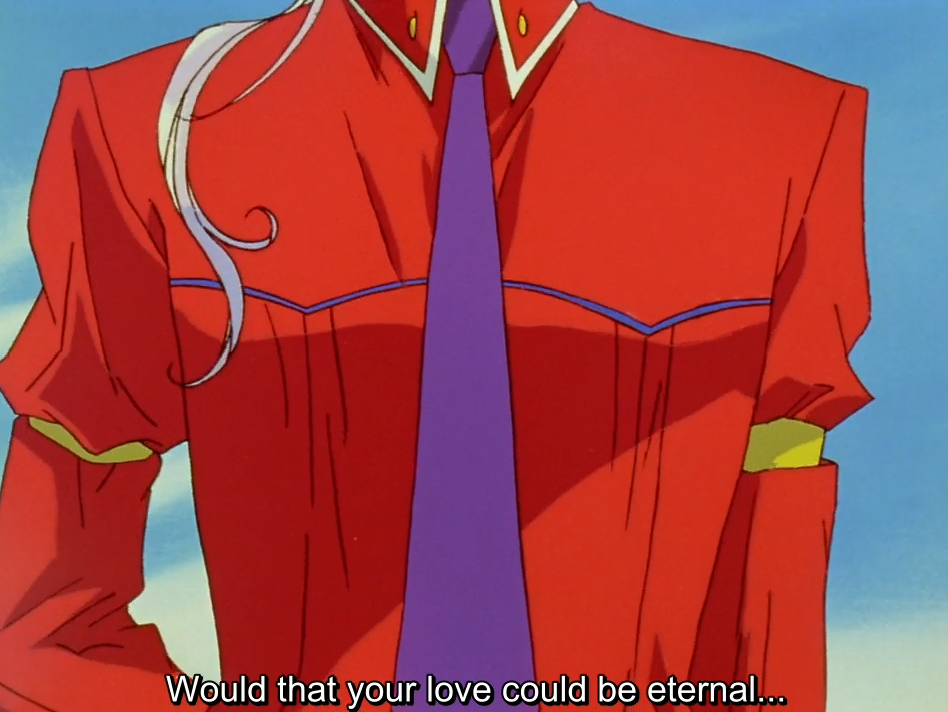
Akio: その思いはもしも永遠ならば…
Akio: Would that your love could be eternal…
I wanted to make Akio sound as pretentious and up himself as possible with this line because the Japanese line is so overly poetic and lame. One theme that has come up a lot during editing is Anya making sure that the voices of the characters all sound correct, and one thing that they often make note of is Akio’s pretentiousness and air of superiority despite not actually being that smart. I think portraying him as a Edward-Norton-in-glass-onion type works well because his worldly affect would actually work on the naive children in the show, but it also subtly exposes him to the audience as a piece of shit bastard.
I also like how, depending on how you read this kind of thing, this sort of portrayal can lead to some viewers genuinely giving him credit for being intimidatingly intelligent, and I think it’s important for him to be seen as such sometimes.
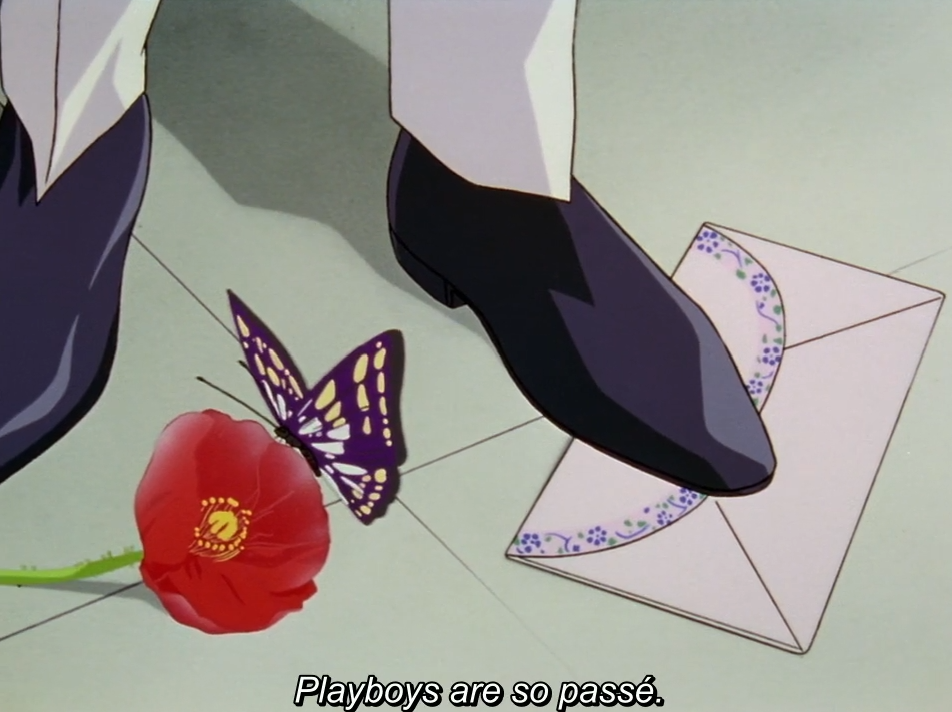
Touga: プレイボイの生徒会長、きりゅうとうがか。プレイボイとは古いな。
Touga: Student president Touga Kiryuu, infamous playboy, eh? Playboys are so passé.
Touga would say passé, the wanker. In this context 古い (old) means more like “outdated” or “outmoded”. The way that he says this sort of sounds like he’s talking about a style or a particular kind of clothing, so I thought passé fit perfectly and conveyed his bitterness well.
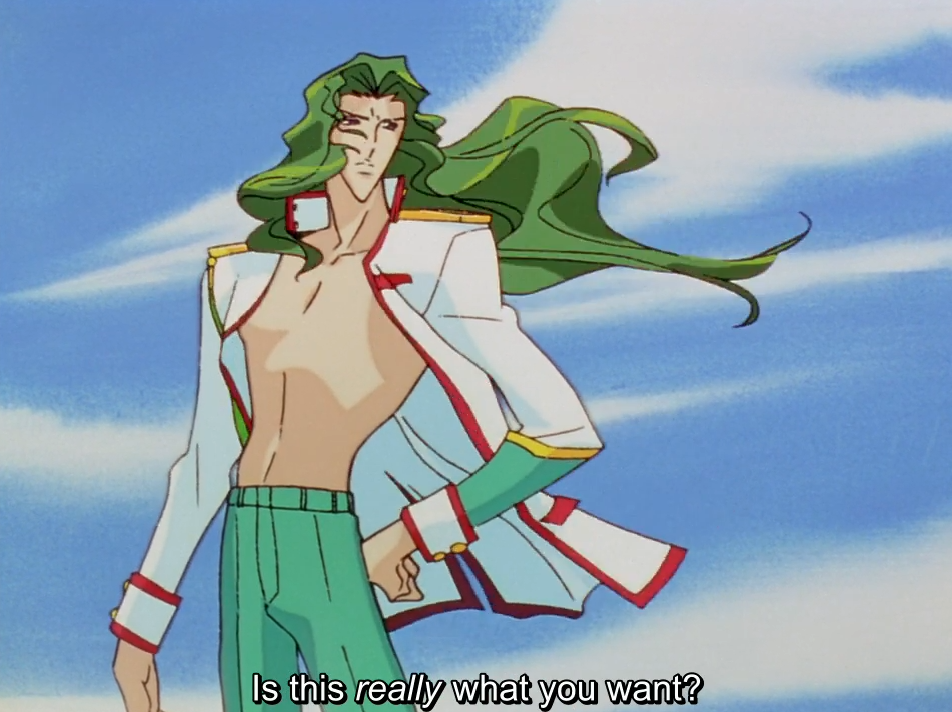
Saionji: 貴様は本当にそれでいいのか?
Saionji: Is this really what you want?
This line is an echo of the fairy tale introduction:
でもいいの、本当にそれで?
But is that really what she wants?
I didn’t notice it at first, but the Japanese phrasing is very similar. Both lines emphasise the sentiment of “are you sure you know what you’re doing?” and “I think you’re making a mistake”. I wonder if this mirroring was intentional.
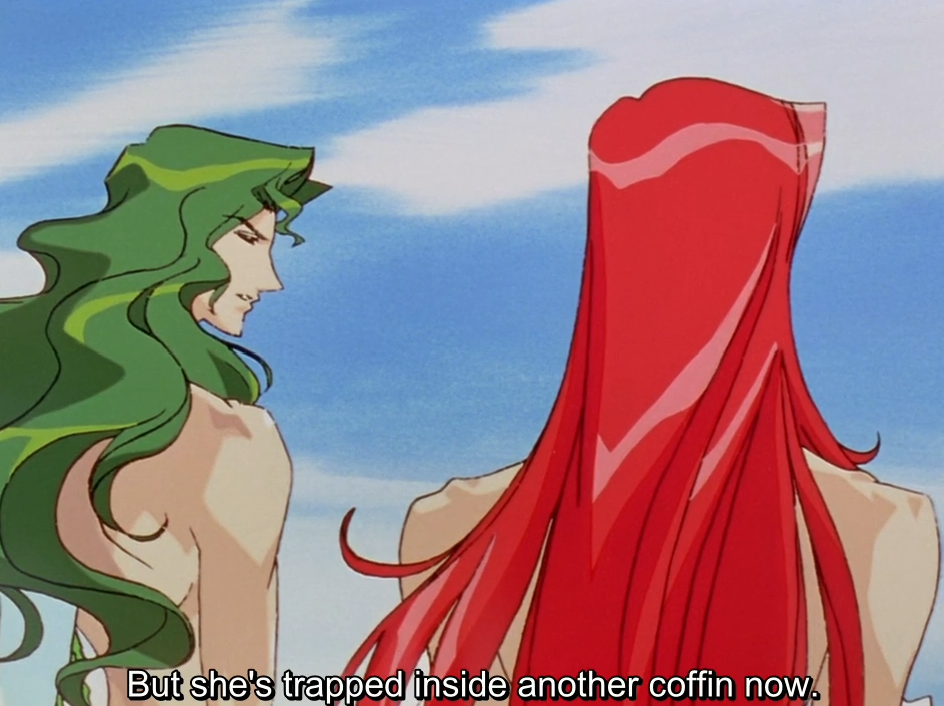
Saionji: 確かに理事長はあの時あの子を救ったかもしれない。だがあの子は今も棺の中にいる。いや、彼女だけじゃない。俺たちも棺の中にいるんだ。
Saionji: It’s true, the chairman may have saved her that day… But she’s trapped inside another coffin now. No… it’s not just her. We’re trapped inside our own coffin.
There’s quite a lot to say about these sentences. In the second sentence, I use the phrasing “another coffin”. This was tricky, because the text isn’t explicit about whether Saionji means she’s inside another coffin, or she’s inside the same coffin again. However, I strongly believe it should be phrased as “another” for two reasons. 1. It’s thematically important that Dios actually and truly saved her from that coffin specifically - Touga’s worldview is partially built on that fact. 2. Obviously Utena isn’t literally inside a coffin, so Saionji is speaking metaphorically. If he’s speaking about Utena’s first coffin, he’s speaking about the pain of impermanence and loss and the despair that comes with knowing that nothing lasts forever. Which is not the coffin Utena is currently inside! So I feel like the “another” phrasing is justified. Using “a coffin” or other phrasings I tried just didn’t have the same punch to it, which is important for this line.
In the fourth sentence, we have a translation which my editor Anya was very surprised by, because another translation had it as “coffins”. Japanese doesn’t have plurals, so what Saionji actually mean is up for interpretation, and there are plenty of options for that! I used singular coffin because I felt it helped the line be more ambiguous:
- “We’re each trapped inside our own coffin” OR
- “We’re all trapped inside a coffin” OR
- “We’re both trapped inside our own coffin together”
I saw the “all trapped inside a coffin” interpretation as referencing the “break the egg” speech — everyone, all the students, are trapped in the world, the egg, the coffin. This is my favourite interpretation, but I also like the interpretation where Saionji is saying that each of them have their own coffin, their own walls, their own issues to overcome.

A big thank you to my editor @dontbe-lasanya! We’re almost at the end!
Follow the blog to stay updated as we come into the final few episodes! For all episode released so far, see this link:
Haru Dipthong’s Utena Fansub - Google Drive
Rose divider taken from this post.