Utena Fansub Ep 26 Translation Notes
Revolutionary Girl Utena Episode 26 Miki’s Birdhouse (The Sunlit Garden, Arrangement).mkv
お前は彼女の事どんな風に思ってるんだい?
This line from Akio is an interesting one to translate. Word for word, it means “How do you think of her?” But this misses a few bits of nuance. For example, 彼女の事 is “her”, but it comes with the nuance of “her whole self”, so the question is almost like “what do you think of her - body and soul?”
“How” is also an oversimplification of どんな風に, which feels more like “in what kind of way do you think of her”? For this line, I settled on this:
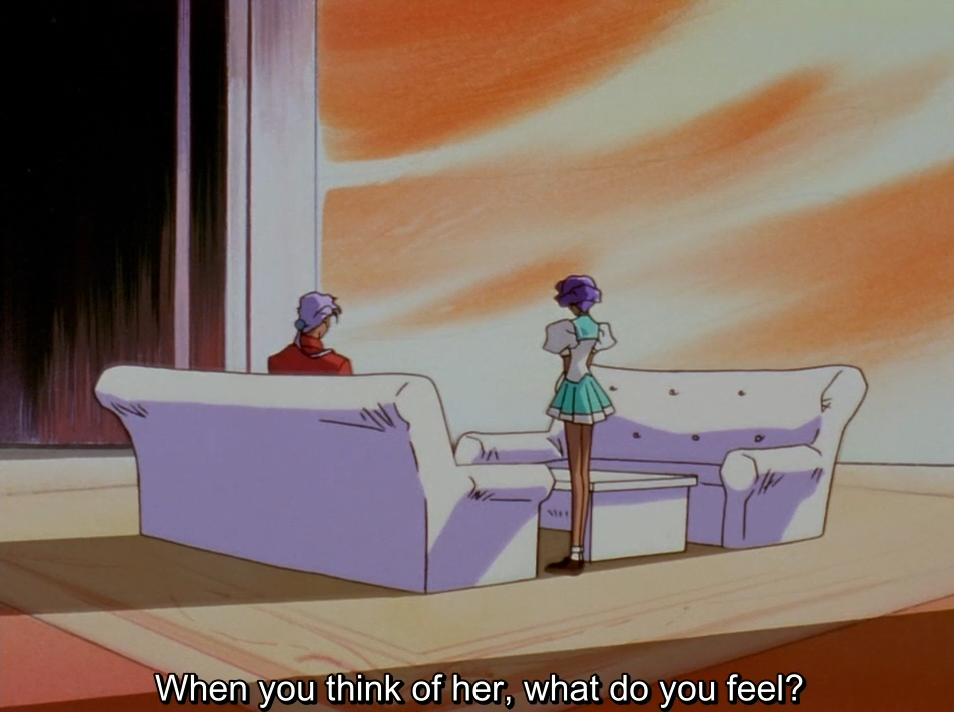
When you think of her, what do you feel?
I believe it encapsulates what Akio is asking, even though the individual words deviate quite heavily from the original script.
Akio then grabs Anthy violently and asks again, this time more directly and aggressive:
彼女の事どう思ってる?
Again, this could be translated directly as “How do you think of her?” The only thing that has changed is どんな風に into どう as well as omitting the subject and question particles — a shorter sentence with more direct meaning. I translated it as a more direct way of asking the same thing:
What is she to you?
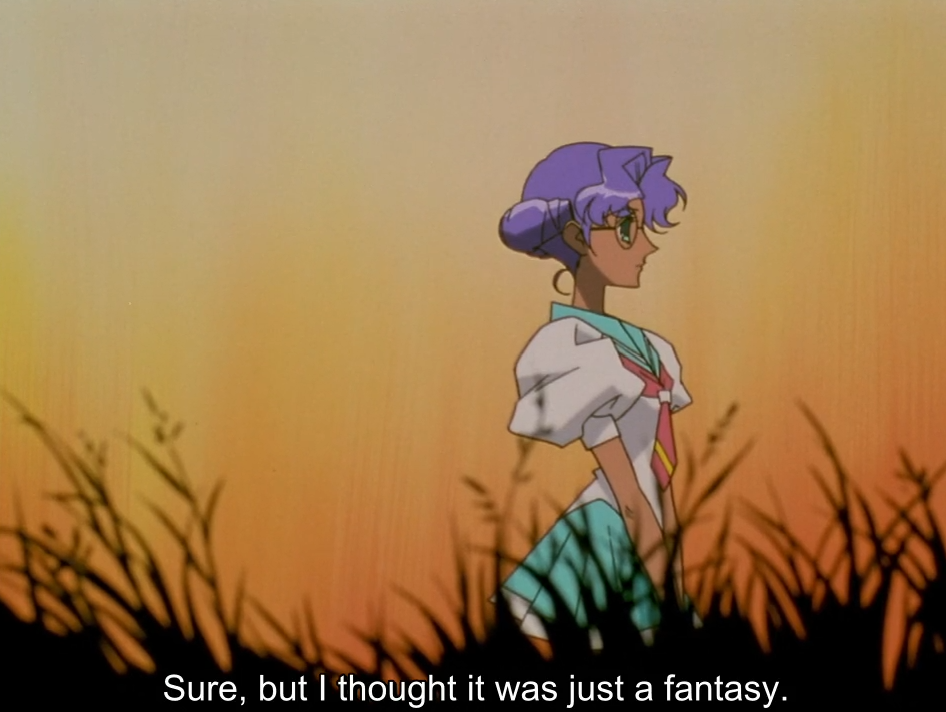
Anthy: さあ、でもそれはイメージなんでしょ?
Anthy: Sure, but I thought it was just a fantasy.
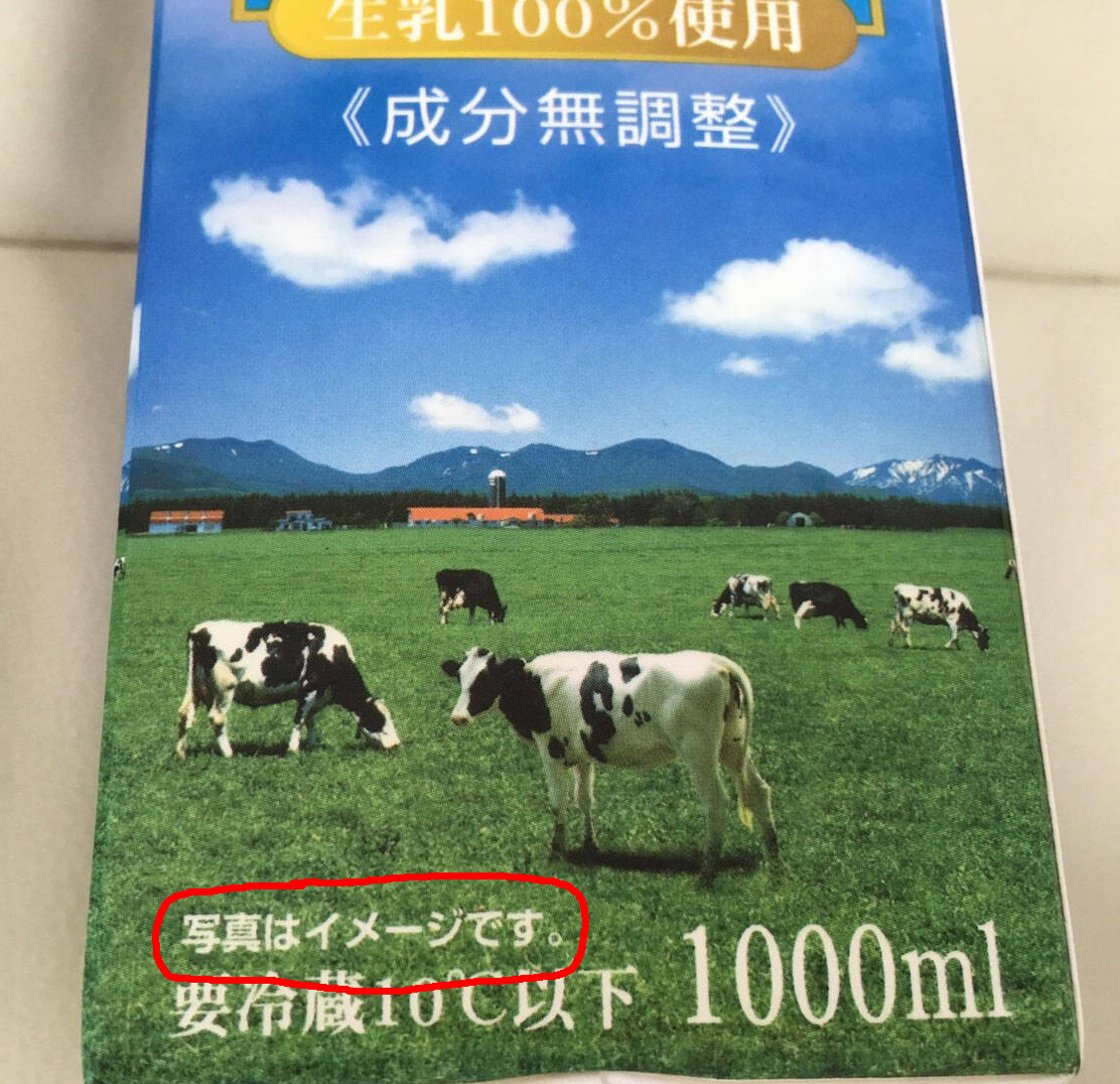
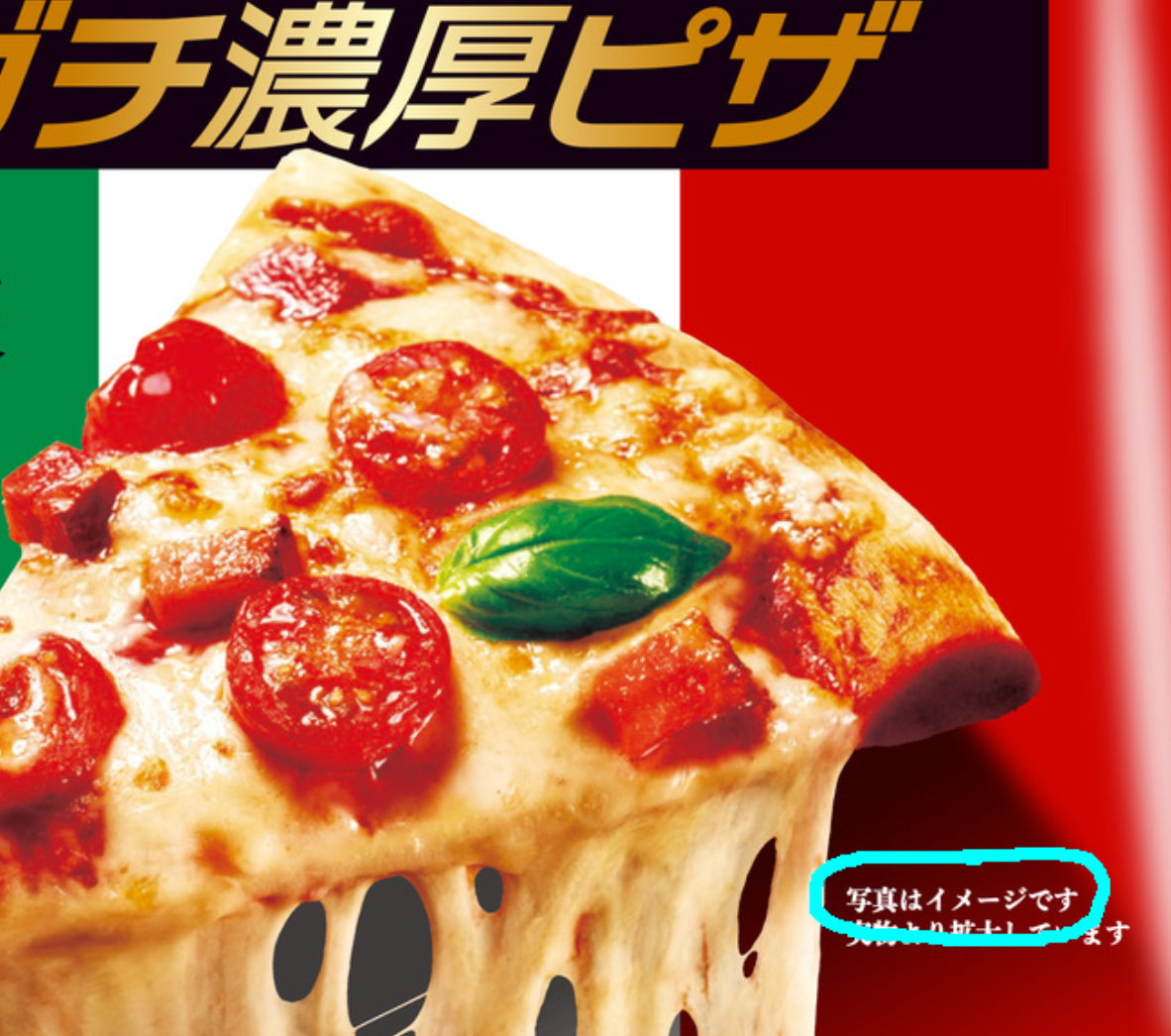
The word イメージ (imēji) is one that trips up a lot of Japanese learners, and even some translators. Because it seems like a 1-to-1 loanword of “image”, it often gets translated directly as such. But in reality, the word only means “image” in the sense of a mental image, an impression, a depiction of something as opposed to the reality of something. This can be most commonly seen in the ubiquitous phrase seen on all food packaging — 写真はイメージです. A bad translation of this phrase would be “this photo is an image”, a hilariously redundant sentence. But its true English equivalent would be the phrase “serving suggestion”, indicating that the product contained inside is not exactly what is depicted on the packaging. 写真はイメージです is therefore more akin to “this photo is one depiction of how this product could look” or even “this photo is merely a depiction and may not reflect reality”, or sometimes even “pictures are for illustrative purposes only” if the photo on the packaging isn’t even a picture of the product (e.g. cows in a field on a milk carton, or a picture of pizza on a packet of pizza flavoured potato chips).
For example, this image was posted on a Japanese listicle titled 『でしょうな!当たり前すぎる「写真のイメージです」』 (translation: “Yeah, no shit! Extremely obvious product disclaimers”). The joke being that “yeah, no shit, I know this carton does not contain a literal field of cows”.
All of this to say, Anthy’s line might be translated by someone who doesn’t understand this as “Sure, but that’s just an image, isn’t it?”. But what she really means is “I thought that garden wasn’t a real garden, but instead an idealised image of a garden from Miki’s mind.”
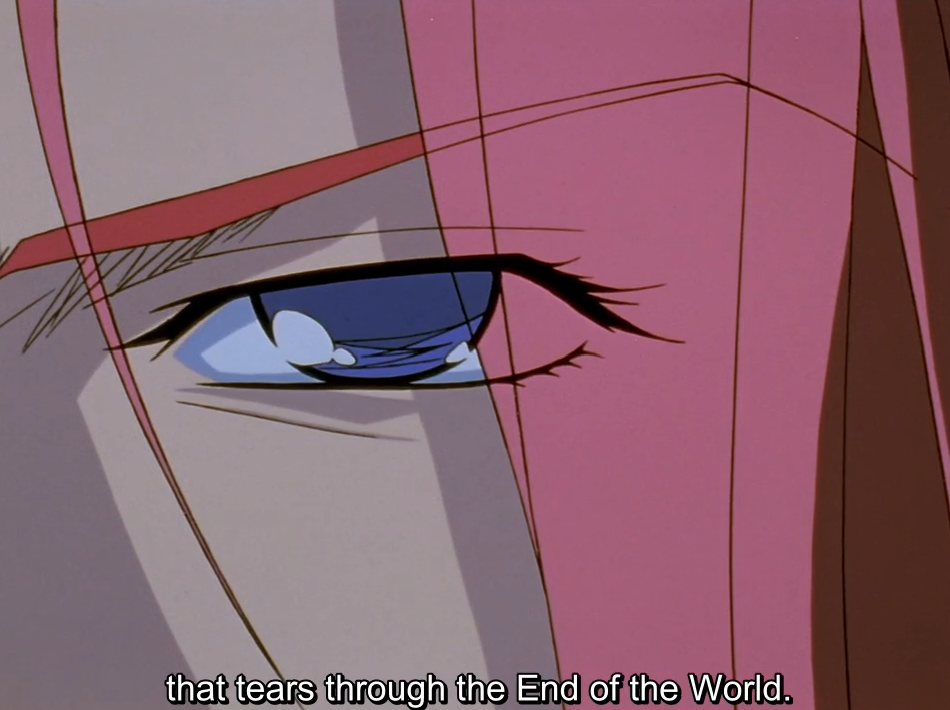
Touga: 君の魂が本当に諦めていなければ、世界の果てを駆け巡る、この音を聞こえるはずだ。
Touga: If your soul hasn’t truly given up… You should be able to hear the sound that tears through the End of the World.
I forgot to discuss this in the notes for last episode, but it’s worth highlighting since it’s a phrase that will be repeated again and again. The key word here is 駆け巡る (kakemeguru) which means “to rush about” which I think is meant to evoke images of a car tearing through the streets. Kakemeguru is also a compound verb made up of the two words kakeru and meguru — kakeru means “to gallop on horseback” (or simply run/rush), and meguru means “to circle around, to tour around”. So the word carries nuances of almost joyriding around at high speeds. Also of note is the use of 世界の果て (end of the world) here to mean a location (the farthest ends of the earth) rather than an event (the revelation).

Thank you to my editor @dontbe-lasanya for their amazing work editing my translations!
Follow the blog for new episodes as they’re released. You can find all the episodes released so far here: